


 ← The Elixir
The Weight You Can’t See – Living With ADHD
Let me tell you something I’ve never quite said openly:
I struggle with ADHD.
It’s not just being a little forgetful or occasionally disorganised.
It’s like living inside a constant broadcast—my mind flipping channels, searching for a clear signal, but every station is playing at once. Loud. And on loop.
Some days, it feels like I’m powered by rocket fuel—a hundred ideas, a thousand sparks. I feel unstoppable. Other days, it’s as if I’ve forgotten how to start at all.
And the hardest part?
You know what you should do. You just can’t always do it.
Feel familiar?
The Everyday Chaos
For a long time, I chased stimulation like it was survival.
Music while writing. Podcasts while walking. Audiobooks while cooking. Always something playing—always something buzzing. Enough caffeine to make chasing a hummingbird seem like a good idea.
It gave me the illusion of momentum. But it wasn’t momentum—it was noise.
ADHD rarely shows up in dramatic, cinematic moments.
It shows up when you turn up at the wrong address. Again.
It’s realising the event was yesterday, not today. It’s double-booking yourself because an idea excited you and you said yes without checking anything.
It’s a full morning spent looking for your wallet, only to find it in the fridge. Yes—the fridge.
My brain is like a popcorn machine. Ideas fly out fast and hot.
One moment, I’m drafting a newsletter.
Next, I’m sketching a product idea, texting myself a thought, adding to a shopping list, and watching a YouTube clip on ancient philosophy. All in ten minutes.
And underneath all that? A quiet feeling of underachieving.
Not because I don’t care. But because I care so much.
I felt like I was built for more—but couldn’t quite deliver.
And I can’t always keep up with my own momentum.
That’s what ADHD feels like. Not quirky. Not careless. Just… too much. And sometimes, not enough.
But the more I’ve learned to see it—not fight it—the more grace I’ve found in the mess.
Why did we fall short so often? Why do simple things drain us, or slip through the cracks, or spiral out into overwhelm? Why did we seem to disappoint the people we love, even when we care so deeply?
Dr. Ned Hallowell calls this the “moral diagnosis.” When you don’t know you have ADHD, you blame yourself.
You label yourself lazy, scattered, unmotivated. You feel like you’re letting down your potential.
You’re not broken. You’re not less than. You’re just wired differently.
That’s awareness. That’s progress. Not perfect—but real.
And with the right tools, you can turn the noise into focus. You can turn the sparks into fire.
The Knowing–Doing Gap
Dr. Russell Barkley, one of the world’s leading ADHD researchers, says..
“ADHD isn’t a disorder of knowing what to do. It’s a disorder of doing what you know.”
And if you live with ADHD, you know how real that is.
You’ve got all the knowledge. All the insight. You’ve read the books. You’ve listened to the podcasts. You’ve highlighted the quotes.
But when it comes to actually applying it—when it comes to doing—it can feel impossible.
It’s not that we lack intelligence. It’s that our executive function system—the part of the brain that translates intention into action—is wired differently.
So we have to work differently.
Not harder. Just… smarter.
We have to create scaffolding—external reminders, environmental prompts, visible time blocks. Because mental to-do lists? They vanish. Future consequences? They feel abstract.
Which is why long tasks fall apart.
Now let’s talk about what’s actually helped me.
And if the above resonates, it may help you.
Tools for Daily Wins
Try some of these:
• Body first, mind second — Movement is non-negotiable. A short run or walk changes everything. Cold shower, breath work, just change the state when ever lost.
• Time blocking — One task, one block, no switching. Little steps and break task down.
• The 20-minute sprint — Set a timer. Make it visual. Get a sand timer. A big clock! Whatever it is, see it and make time real.
• Clear space = clear mind — Build an environment which is precious to you. A specific room to work, a specific chair to meditate, a specific workout class which you love the instructor.
• Whiteboards and sticky notes — Out of sight is out of mind. I need to see my thoughts. Get everything out of your head! Big wall calendars, journals, etc!
• Tech boundaries — I remove temptation. App blockers. No social media on the phone.
• Sounds — Looping a song when working or sitting in a very quiet space.
• Limit caffeine — If you use it, set an intention for how you will spend your time beforehand. I like it for runs or long focused tasks.
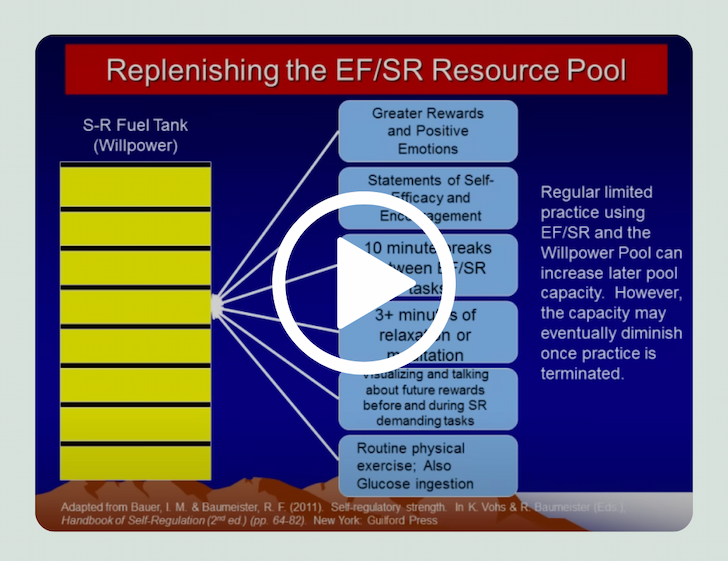
A must watch :
This single-handedly the best video on ADHD (I have watched 99% of them)
This is how you treat ADHD based off science, Dr Russell Barkley part of 2012 Burnett Lecture
From Shame to Structure
There’s so much shame that comes with ADHD.
Your friends think you forgot their birthday because you don’t care.
But they have no idea how much you do care—how often you beat yourself up over it, replaying the moment in your head, wishing you could go back.
Like Dr. Ned Hallowell says: You have a Ferrari for a brain with bicycle brakes.
You’re not broken. You’re high-powered. Fast. Sensitive.
You’re not weak, you just need pointing in the right direction and you’re not alone.
What I Want You to Know
When you understand your wiring—when you work with it, not against it—you unlock something powerful.
You stop chasing perfection. And start building momentum.
This isn’t about fixing yourself. It’s about coming home to yourself.
If this hit home, bookmark it. Forward it. Save it. Share it.
Re-read it when the noise gets loud.
There’s a flame inside you. And with the right tools, you can shape it.
Have a great week ahead.
Kia Kaha & Love,
Chris