


 ← The Elixir
Are You Any Happier, Healthier or Wiser?
Over the last few weeks of The Elixir, we’ve explored a lot of topics.
Like, "How to spend less time on your phone", "The Power of Anti-Goals" and much, much more..
But I have one quick question for you:
Are you any happier?
Has your life improved?
Have you implemented any of these lessons?
If not, then read on...
I want to dig into a fundamental truth,
Why are we SO BAD at taking action on what we learn?
I hope this week's Elixir hits the home run for you.
Let's begin...
Why We Fail To Make Progress
As someone who has dyslexia, I’ve always admired the late scientist and philosopher Gregory Bateson’s perspective on learning.
Many of us grew up believing intelligence is an innate trait.
Something you either have or don’t.
We equate intelligence with memorising facts or solving equations.
I used to struggle with exams, while my classmates rushed to finish.
I wrestled with whether “C” was the answer or just my brain saying, “See ya later!”
But it wasn't until I learned Bateson's secret to learning
That changed me forever.
Here it is
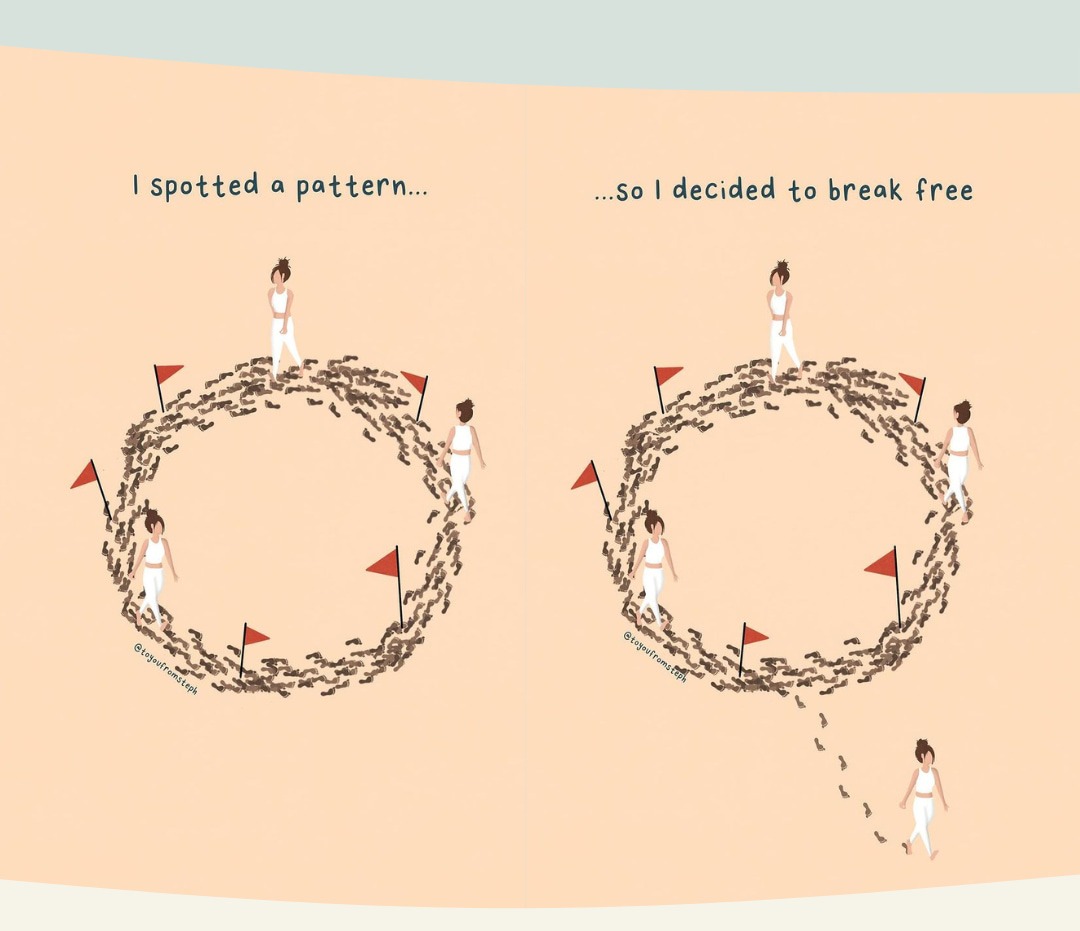
Learning = same condition, different behaviour.
Intelligence = the speed of behaviour change.
Let me explain.
We often think of learning as something that happens in our heads—like reading a book, listening to a podcast, or sitting in a classroom.
But learning isn’t just about absorbing information; it's about changing your behaviour based on that information.
Let me explain with some personal examples.
The Time I Learned (the hard way) About Coffee
I used to drink five or more cups of coffee a day.
Every morning, I’d pour myself another cup, thinking it was the only way to get through the day.
What it really did was skyrocket my anxiety.
I knew it wasn’t good for me, but I kept reaching for the mug—same condition, same behaviour.
I hadn’t learned a thing.
The Time I Worked Myself to Exhaustion
Then, there was a period when I was glued to my laptop day and night, believing the grind would eventually pay off.
I completely ignored my body’s need for rest.
My inner dialogue was relentless: "It’s not enough," "You’re not enough."
The burnout hit me like a freight train, but it took years before I actually made a change.
Despite all the red flags, I had the knowledge but didn’t apply it.
The Time I Let My Phone Control My Life
There was also a time when I’d lose hours to my phone without even realising it.
I’d open it to check a quick message, and before I knew it, I was in a rabbit hole of social media, scrolling mindlessly.
I’d read all these articles about digital detoxes and the importance of being present.
But there I was—same condition, same behaviour. I hadn’t learned.
The common thread?
In each of these scenarios, I knew better.
But it was the speed of how slowly I changed my behaviour.
What if those experiences of struggle could be compressed into weeks, or even days? Instead of years…
I had the knowledge, but I didn’t act on it.
Learning and intelligence aren't just knowing—it is the speed of implementing and doing.
If your circumstances do not change and neither does your behaviour, you haven’t truly learned anything—you’ve simply been distracted and entertained.
The Promise Land
We are all looking to grow, be happier, be healthier and wiser.
The faster you can apply new insights and make changes, the smarter you become.
And here’s the thing—you have the power to change at any moment.
I truly believe that.
Learning and life aren't a spectator sport.
It doesn’t happen by watching others or by gathering knowledge that you never apply.
It happens when you take that knowledge and make a shift—whether that means cutting back on caffeine, setting boundaries at work, or simply changing your inner dialogue.
Most of us hesitate to implement changes because it’s uncomfortable.
But if we keep making the same mistakes we are recreating the same same behaviour and outcomes.
It’s easy to get caught in the trap of consuming information for gratification without doing anything with it.
So, next time you have a life experience, pick up a book, listen to a podcast, or watch a YouTube video, ask yourself:
"Am I engaging with this just for entertainment, instant gratification, or as a distraction?
Or am I genuinely looking to make a change?"
The true measure of intelligence isn’t how much you know.
But how quickly you can adapt, learn, and change your behaviour after.
“Knowledge is NOT power. Knowledge is only POTENTIAL power. ACTION is power.”
Tony Robins